How to manage multiple artists without the quietest one slipping: treat each as its own business, run one calendar across the roster, get invited instead of borrowing logins, and report on a schedule.
You have more than one artist, and one of them is getting less of you than they did last month. You probably know which one.
This piece is for you, the manager with a roster, even a small one. It covers how to manage multiple artists without the quietest act paying for the loudest one's good week: the calendar you run, the access you hold, and the report each artist should get from you.
Every artist is a separate business that shares one of you
The most common mistake is running a roster as one long to-do list. It feels efficient. In practice it hands your attention to whoever is most urgent, and urgent is a different thing from important. The artist with a single moving this week gets every hour. The artist building quietly toward next spring gets whatever is left, which some weeks is nothing.
Treat each artist as their own business with their own plan, their own money and their own calendar, then decide on purpose how your week is split across them. Write the split down. If one artist is getting half your time this month, it should be because you chose that.
One calendar across the whole roster
Separate plans are right. Separate calendars are a trap. The collisions that hurt managers happen between artists: two releases landing on the same Friday, two shows in different cities on a night you promised to be at both, one artist's pitch deadline falling in the middle of another's tour.
Keep a single roster calendar holding every artist's dates, color coded if that helps, and read it in two views: the next two weeks and the next three months. The three-month view is the one that saves you, because it shows the pile-up while there is still time to move something.
Get invited instead of borrowing logins
Holding every artist's passwords feels like trust. It is a liability for them and for you, and most of the platforms you need already offer proper access for a team.
Spotify for Artists has three access levels, Admin, Editor and Reader, plus an optional Team Admin level, and according to Spotify's help pages only Team Admins can invite people or change their access. YouTube Studio separates the channel Owner from a Manager, who can manage permissions, and an Editor, who cannot. Limited versions of the Editor and Viewer roles hide revenue data, as Google documents.
That gives a roster a clean rule. The artist owns the account. You get invited at the level the job needs. When the relationship ends, access ends with a click instead of a password change nobody remembers to make. If an artist offers you their login anyway, ask them to invite you instead. It is a small conversation, and it tells them you take their business seriously. For the artist's side of that conversation, here is our guide to sharing account access.
The report each artist deserves
Every artist on your roster should hear from you on a schedule, in the same format, whether or not anything exciting happened. Monthly works for most. Three short sections are enough: what happened, what is coming, and what you need from them. The third section keeps projects moving, because an artist cannot hand you a decision, an approval or a vocal take they did not know you were waiting for.
The format matters more than it looks. When every artist gets the same report, you notice the one who has had three months with nothing under "what happened". That is the artist you were about to drop without meaning to.
How to manage multiple artists week to week
Hold one roster review a week and go through the artists in reverse order of how loud they are. Quietest first, while you still have energy and before the urgent act eats the hour. For each one, ask three questions: what is the next date that matters, is anything stuck, and what do they need from me before next week.
Some weeks the answer for an artist is "nothing yet", and that is fine. The point is that you asked.
When one of your artists starts drawing label interest, the calendar and the reports become evidence as much as tools, and judging whether a deal is right gets easier when you can show the work. For the artists at the start of their careers, you may serve them better by coaching them through running their first campaigns themselves than by doing it for them.
When the roster outgrows your setup
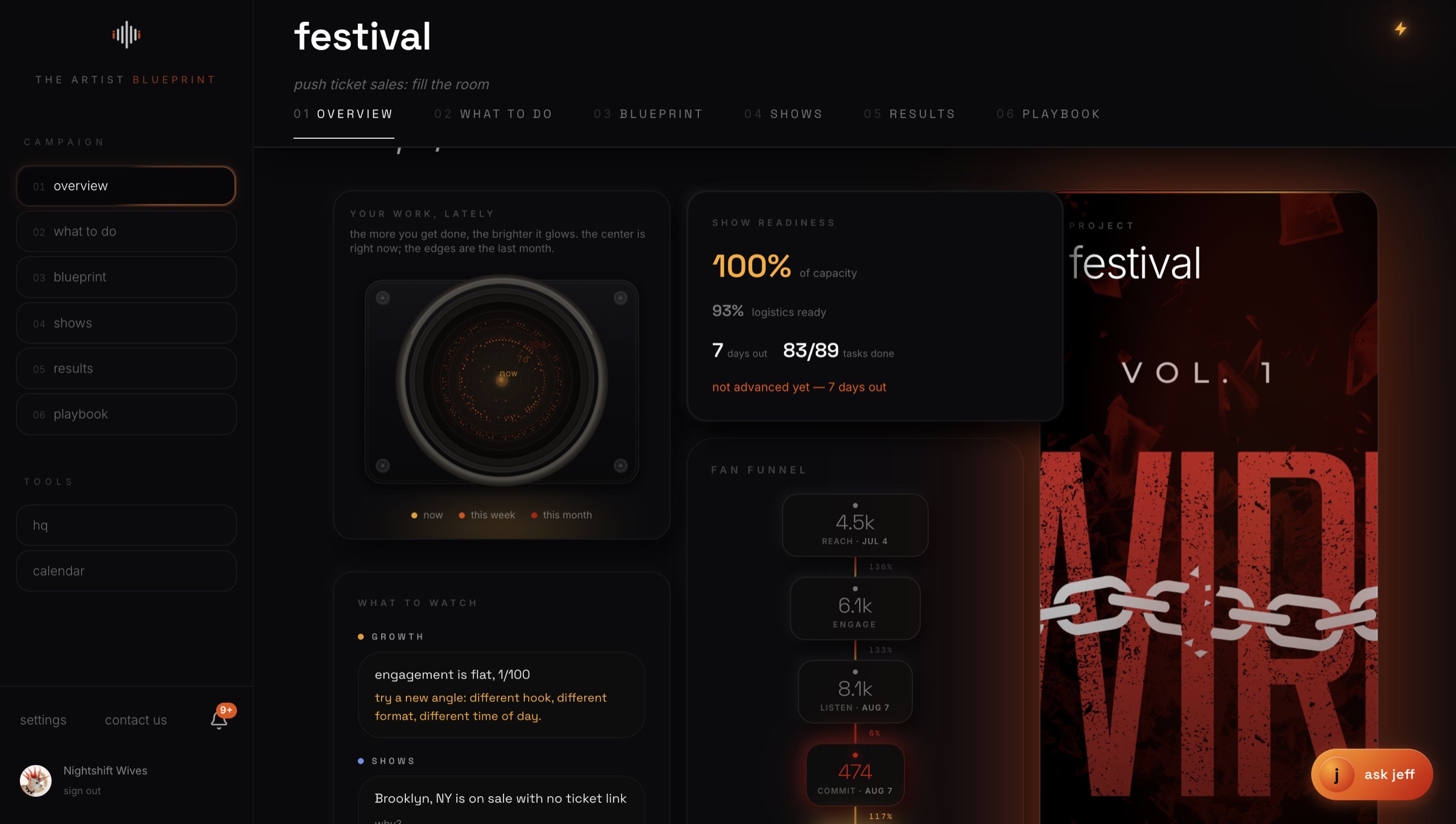
A shared calendar, a folder per artist and a report template will carry you further than you think. At some point, though, you spend more time keeping the system current than using it. In The Artist Blueprint, each account belongs to one artist, and the artist invites their team, you included, into it. Running your whole roster from one dashboard is what the Enterprise plan is for, and it starts with a conversation with sales. The page for managers explains how the platform approaches that work, and the product tour covers the rest.
Now think of the artist from the first line of this piece. Put their next date on the calendar today, and send them the report before they have to ask for it.
Read next: DIY Music Marketing: When Running It Yourself Wins →
Managing an artist we should hear? Submit their music →
Working on something bigger than one release?
We build and run campaigns for artists and brands — testing a single, rolling out an album, taking a tour global. Same team from brief to launch.
Comments