How to track music income when one song can pay you through seven different doors on different schedules: what to record from every statement, how to tag costs, and what to set aside for taxes.
Count the doors. One song from one independent artist can send money back through as many as seven of them, and no two pay on the same day.
That is why so many artists cannot say what they earned last year, and it is the whole problem behind how to track music income. The money is real. It just arrives in pieces, on different schedules, in formats nobody designed to be read together.
How to track music income, starting with where it comes from
Here are the seven, for a song you wrote and recorded yourself:
- Your distributor, paying out what streaming services and download stores owe for the recording.
- A performing rights organization such as ASCAP or BMI, paying the songwriter's share when the song is performed, streamed or broadcast.
- A publisher or publishing administrator, if you have one, collecting the publisher's share.
- The MLC, which pays mechanical royalties from US streaming services.
- SoundExchange, which collects when the recording plays on digital radio in the US.
- YouTube, directly or through your distributor.
- Sync fees, when a film, show, game or ad licenses the song.
Then add everything that is not a royalty at all: shows, merch, brand deals, fan-direct sales. Who owns which half of a song decides which of these doors pays you, and sync is its own world.
How often does each one pay?
On different clocks, which is the main reason income is hard to see. The MLC pays monthly, about 75 days after each usage month closes, by its own account. SoundExchange pays monthly by direct deposit once at least $100 is waiting, and quarterly otherwise, per its FAQ. BMI pays quarterly, in February, May, August and November, according to its royalty policy manual. Your distributor keeps its own cycle, and so does every venue settlement.
So a stream in January can turn into money in April from one door and in August from another. Chasing each payment is a losing game. Recording each one the same way when it lands is the fix. The label version of this rhythm, month by month, works for a solo artist too.
What should I write down from every statement?
Six things, every time: who paid, which period it covers, the gross amount, any fees taken, the net that reached you, and the date it arrived. If the statement breaks it down by release, keep that too. Everything else can stay in the PDF.
Keep it all in one place and one currency. When a payment comes from abroad, record the rate it was converted at rather than today's rate, or your totals will drift every time the dollar moves.
How do I know what a release or a show actually earned?
By tagging costs as carefully as income. Every expense belongs to something: the single, the tour, the video. When the ad spend, the mix and the van rental are each tagged to what they paid for, you can hold them against what came back and see which releases and shows made money and which only felt like they did.
Is an advance income?
It is cash, not earnings. An advance, a loan or money from backers lifts what is in your account without changing what your music has earned, and some or all of it may be owed back out of future royalties. Track it on its own line, or a good month can look like a great one.
How much should I set aside for taxes?
More than feels comfortable. In the US, nobody withholds tax from royalties the way an employer does from a paycheck, and self-employed people owe self-employment tax on top of income tax: 15.3 percent for Social Security and Medicare, per the IRS. Park a share of every payment the day it arrives, and ask an accountant what the right share is for you.
Where does this live in The Artist Blueprint?
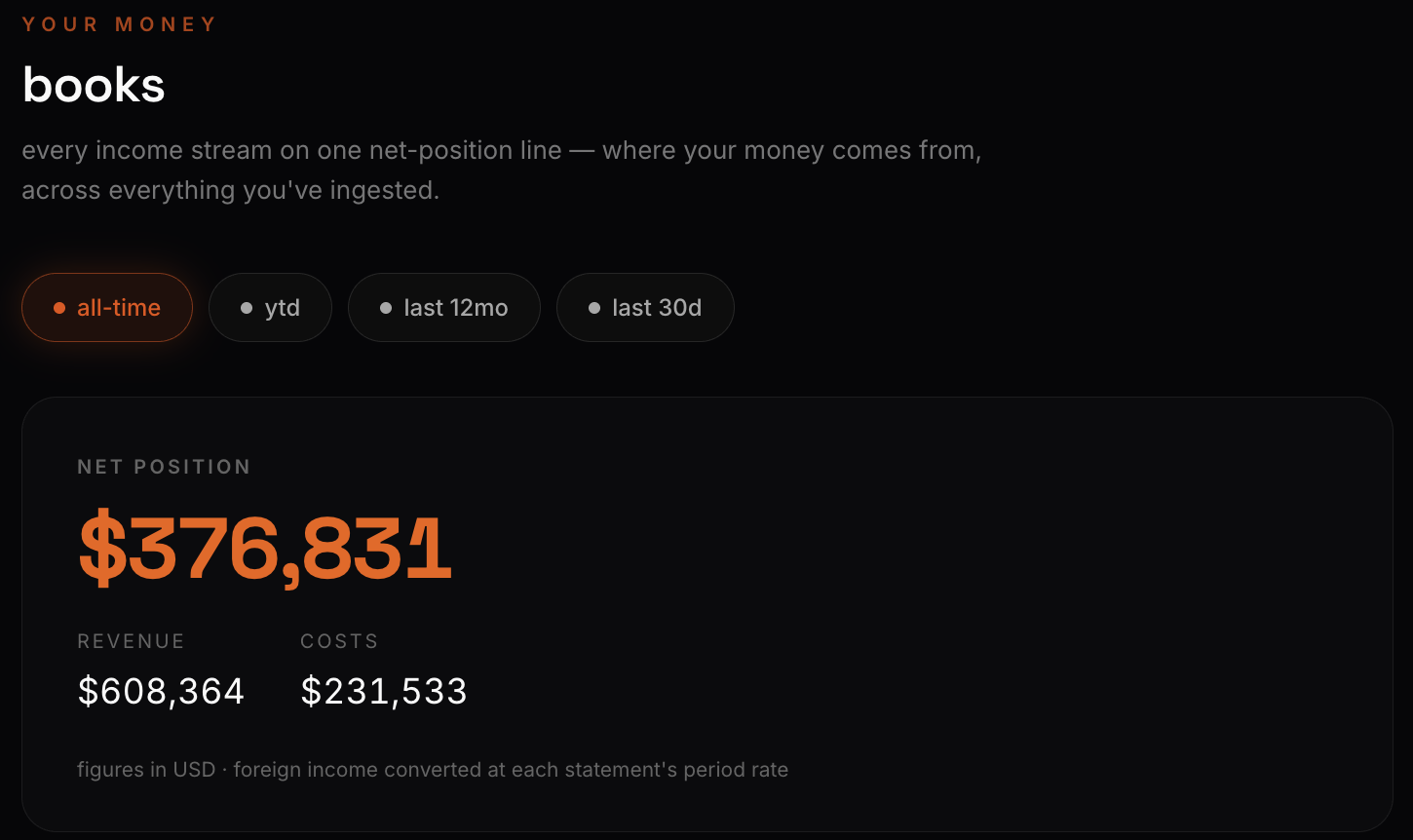
In Books, inside HQ, the back office. It puts every income stream on one net-position line, your royalties and the money from all your campaigns combined, and you can read it all-time, year to date, over the last 12 months or over the last 30 days. The screenshots here come from the demo account, so the figures are sample data.
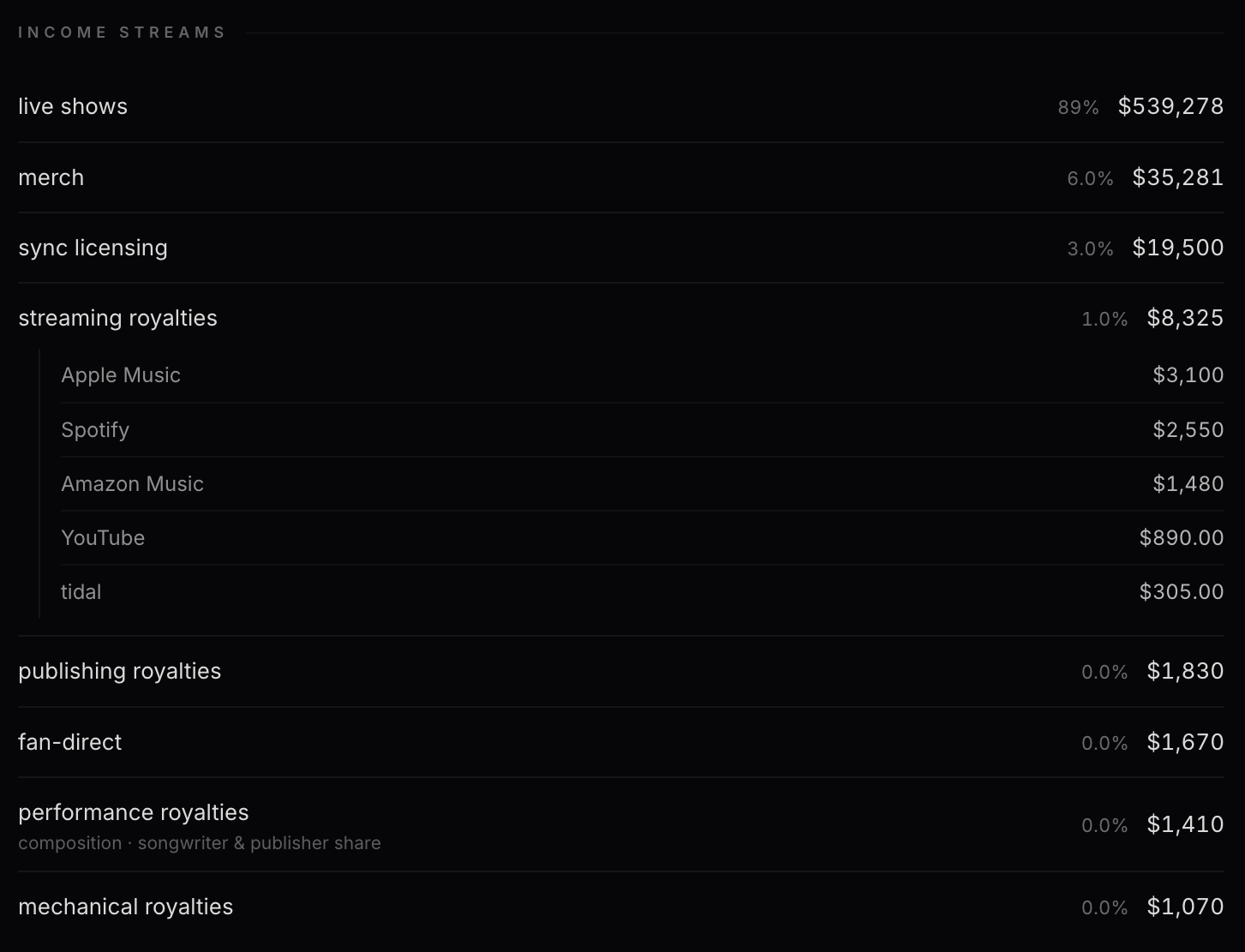
The income streams list breaks that total down by source: live shows, merch, sync, streaming royalties by service, publishing, performance and mechanical royalties, and fan-direct sales, with costs such as ad spend set against them.
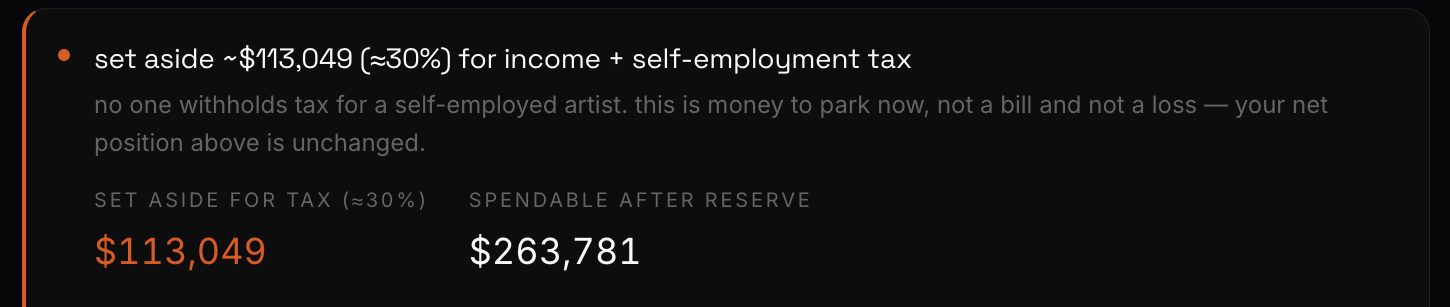
Two cards answer the questions above on their own. Capital in keeps advances, loans and backers apart, so money you raised lifts your cash but not your earned net. The tax card suggests setting aside about 30 percent for income and self-employment tax, and shows what is left to spend after that reserve.
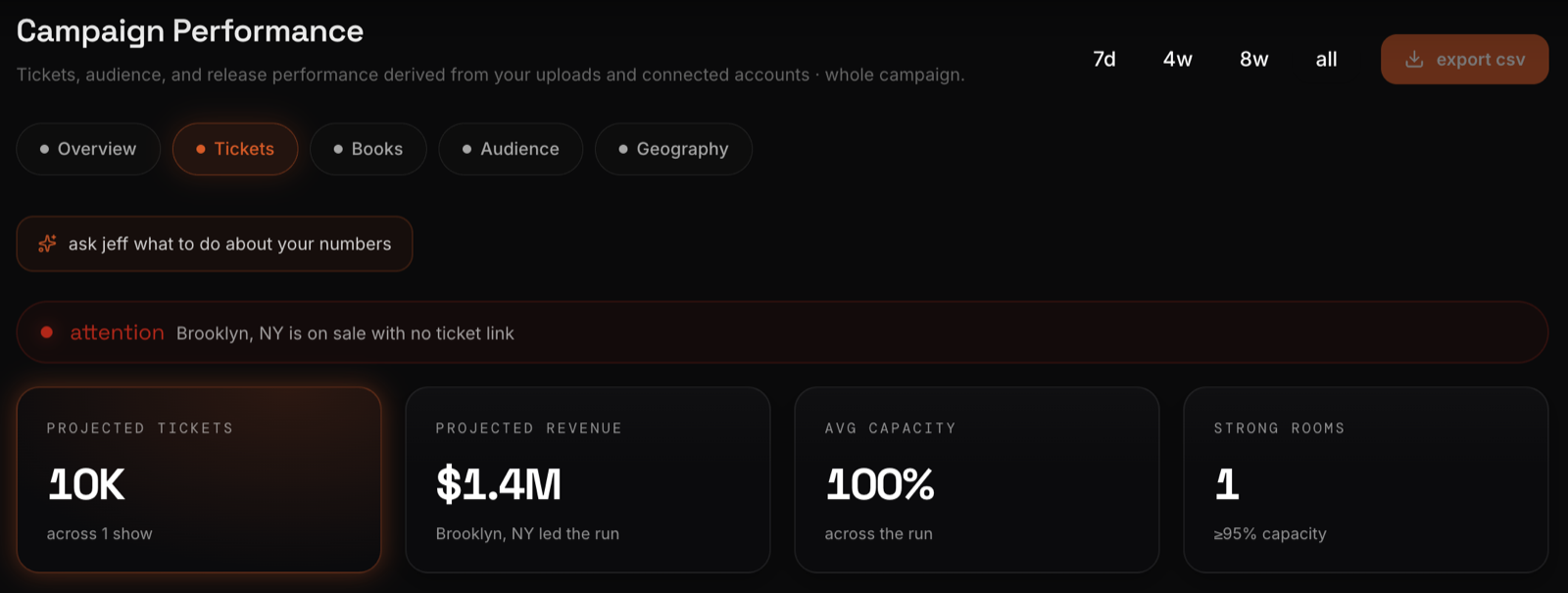
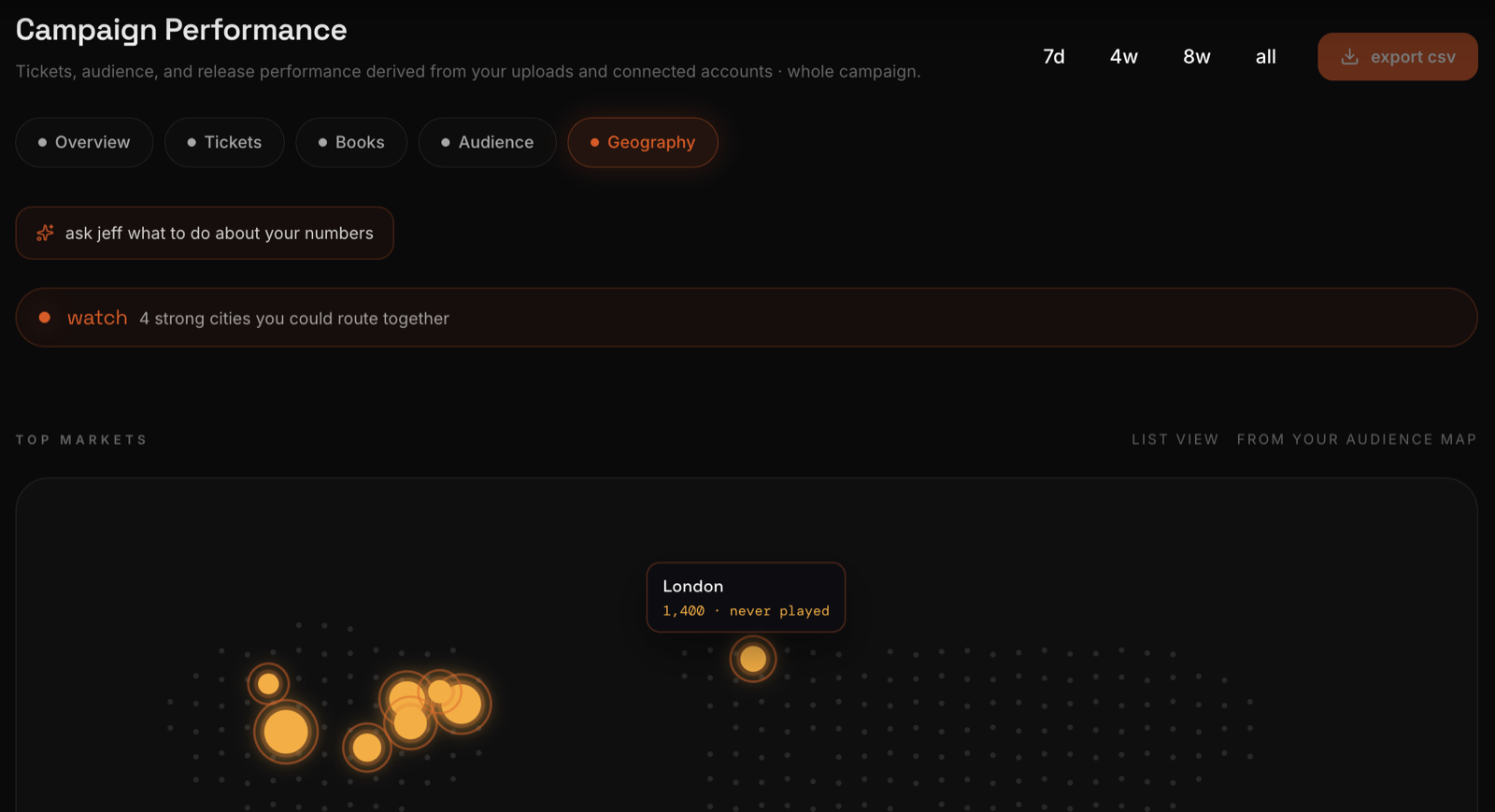
Inside each campaign, the Results tab does the same job for a single release, show or tour, built from your uploads and connected accounts, with views for tickets, books, audience and geography.
Books sits alongside the rest of the back office, including your EPK builder and Blackbook. How much of the financial tracking you get depends on your plan, and the pricing page spells that out.
Most artists have less of an income problem than a visibility problem. Count the doors, write down six things every time one opens, and April stops being a mystery.
Read next: How to Run an Independent Record Label Without a Back Office →
Earning from your music and ready for more listeners? Submit your music →
Working on something bigger than one release?
We build and run campaigns for artists and brands — testing a single, rolling out an album, taking a tour global. Same team from brief to launch.
Comments