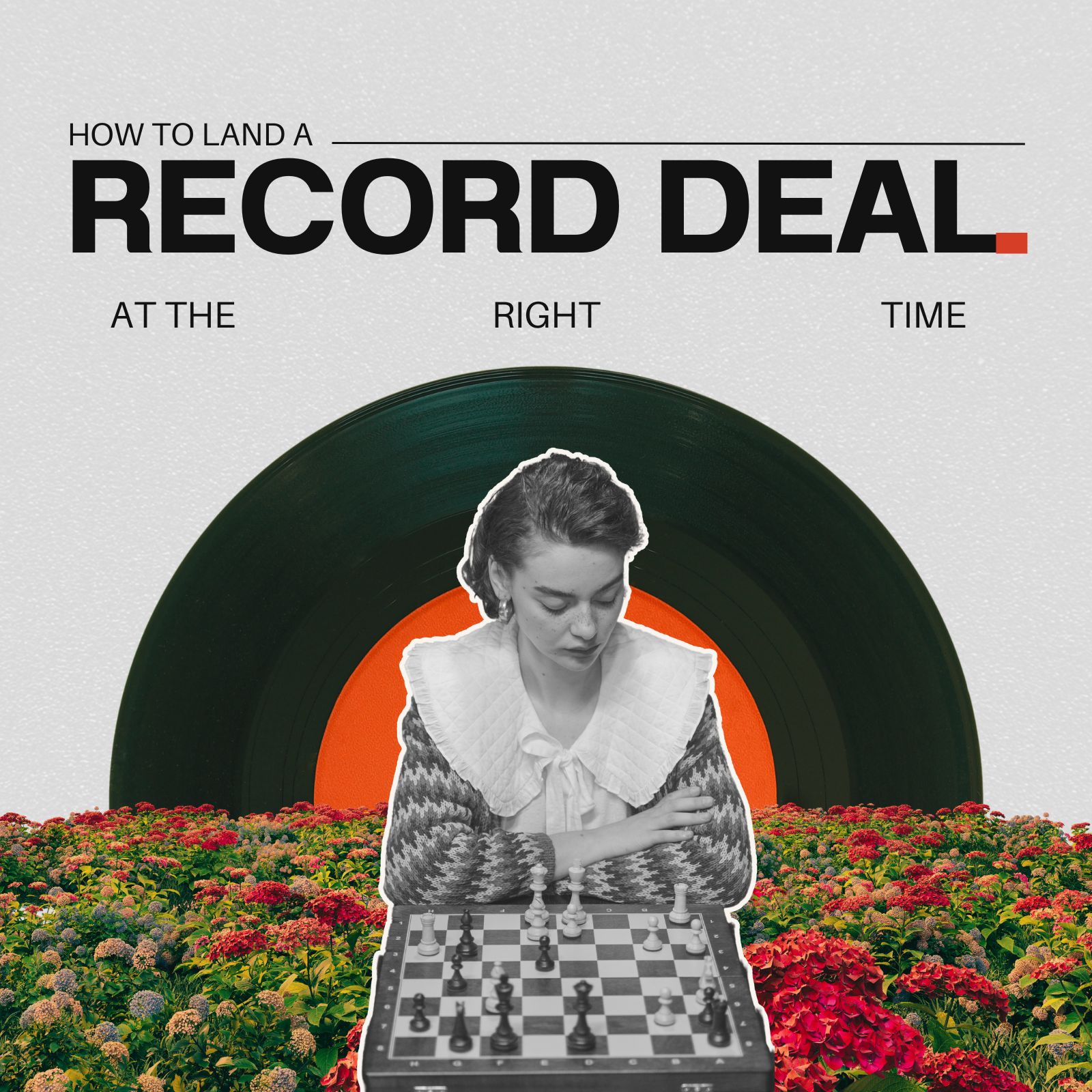
A record deal isn't a finish line. It's a tool. And like any tool, it only works if you pick it up at the right moment, for the right job. Here's how to know when that moment is, and how to walk in with leverage instead of desperation.
For decades, signing a record deal meant you'd made it. It was the validation, the gateway, the thing that separated artists who were serious from artists who were trying.
That story is more complicated now.
Independent artists are headlining festivals, going platinum, and building eight-figure businesses without ever signing to a major. At the same time, the right deal (at the right moment, with the right terms) can still accelerate a career in ways that are genuinely hard to replicate alone.
The question isn't whether you should pursue a record deal. It's whether you, right now, with what you've built, would actually benefit from one. And that question deserves an honest answer.
What a Label Actually Offers, and What It Costs
Labels aren't charities. They're businesses making bets on artists they believe can generate returns. When they sign you, they're investing in you, and they expect a return on that investment, often for a very long time.
What they bring to the table: funding for recording, production, touring, and promotion. Access to top-tier producers, songwriters, and media relationships. Marketing infrastructure and distribution that can put your music in front of audiences you'd struggle to reach independently. And in some cases, genuine creative partnership with people who've built careers before.
What they take in exchange: a percentage of your royalties, sometimes for the life of the recording. In many cases, ownership of your masters. Creative input, sometimes control, over your sound, your visuals, your rollout. And in 360 deals, a cut of your touring, merch, and brand revenue too.
A record deal is only as good as its terms. And the terms you get depend almost entirely on how much leverage you walk in with.
The Clearest Sign You're Ready: You Don't Need Them
This sounds counterintuitive, but it's the most important thing to understand about deal-making. Labels sign artists who are already succeeding because the investment is lower risk. The more you've built independently, the more they need you, and the better your terms will be.
What "ready" actually looks like varies, but here are the signals that matter:
A loyal, engaged audience. Not just follower counts, engagement. Comments, shares, DMs, people showing up to shows. A fanbase that follows you from platform to platform and buys things. Labels can read these metrics better than most artists realize. Ten thousand monthly Spotify listeners who convert to ticket buyers is worth more than 100,000 passive streams.
Real revenue. Streaming income, merch sales, ticket revenue, sync placements, any evidence that your music generates money in the real world. If your last single crossed 100,000 streams or you've sold out a string of shows, you're demonstrating demand. That's what labels are buying.
Consistency. Labels want to see that you show up. Regular releases, a developed brand, an active social presence, a clear artistic identity. Talent is obvious. Work ethic and vision are what they're assessing when they look at your catalog and timeline.
A plateau you can't break through alone. If your growth has stalled (streams leveling off, difficulty breaking into new markets, production quality you can't afford to scale), and you've genuinely maxed out what you can do independently, that's when outside infrastructure starts to make sense. The key word is genuinely. Not "I've been at this for six months." Genuinely exhausted your independent options.
What Labels Are Actually Looking For
When a label considers signing an artist, they're not just signing talent. They're signing a business with a clear market.
They want to see that you understand who your audience is and how to reach them. They want brand identity, a visual and sonic world that's consistent and ownable. They want proof of demand across multiple touchpoints: streaming, live, social, press. And increasingly, they want artists who understand the industry, who know what kind of deal they want and why, and who won't be a difficult signing because they had unrealistic expectations going in.
Approaching a label as someone who needs saving is the weakest possible position. Approaching as someone who's already built something real, who has specific goals a label partnership could accelerate, and who has a lawyer ready to review the contract. That's a different conversation entirely.
Before You Sign Anything
Get a music attorney. Not a manager. Not a friend who's "in the industry." An actual entertainment lawyer who specializes in music contracts. This is non-negotiable. One session reviewing a deal can save you years of bad terms.
Know the deal types. A traditional record deal, a licensing deal, a distribution deal, and a 360 deal are fundamentally different arrangements with very different implications for what you own and what you owe. Know the difference before you walk into any meeting.
Understand what you're giving up. Masters ownership, royalty splits, creative approval rights, term length, option periods, every clause matters. The details of a contract can define your career for a decade. Read everything.
Have a manager with real relationships. A good manager who has existing relationships with A&Rs can get your music heard by the right people and help you navigate a negotiation. If you don't have one yet, build that relationship before you start shopping.
Don't go in desperate. Labels sense desperation the same way anyone does in a negotiation. If you need a deal to survive, you'll accept terms you'll regret. Build until you have options, then choose.
When to Wait
If you're early (fewer than 10,000 monthly listeners, no consistent revenue, no clear brand identity), a label deal right now is likely to cost you more than it gives you. Not because labels are predatory (some are, most aren't), but because you'll be signing from a position of weakness and giving up things you could have held onto if you'd waited six to twelve more months.
The music industry moves fast in some ways and very slowly in others. A year of focused independent building (releasing consistently, growing your audience, developing your visual world, adding revenue streams) can be the difference between a bad deal and a good one. Or between needing a deal at all and having enough leverage to negotiate something genuinely fair.
The Actual Question to Ask Yourself
Not: do I want a record deal?
But: would a label partnership take me further than I can go on my own, right now, with the leverage I currently have?
If the answer is yes, and you have the foundation to negotiate fair terms, then the timing might be right. If the answer is "I'm not sure" or "I need the money" or "I've been waiting for this my whole life", keep building. The deal will mean more when you don't need it.
Read next: Masters, Publishing, and Royalties: A Breakdown →
Building the kind of career that gives you options? Submit your music to BR Marketing Group →
Working on something bigger than one release?
We build and run campaigns for artists and brands — testing a single, rolling out an album, taking a tour global. Same team from brief to launch.
Comments