Is Chartmetric worth it? For a label scouting talent, yes. For a solo artist with one project, not yet. Current Chartmetric and Soundcharts prices, compared, with a verdict for every kind of reader.
Every few months someone tells an independent artist they need more data. Usually the artist already has more data than they read.
Spotify for Artists and YouTube Studio cost nothing, and between them and your distributor's reports they answer most of the questions a solo artist should be asking. So before answering the question people actually search for, is Chartmetric worth it, be honest about what you would be paying for. Chartmetric and its closest rival, Soundcharts, are very good at one job. Whether that job is yours depends on who you are.
What the analytics platforms actually do
Chartmetric and Soundcharts gather streaming, social and playlist data about artists into one place, for your act and for everyone else's. That second part is the point. Your Spotify for Artists account tells you about you. These tools tell you about the market: who is growing where, which playlists moved an artist like you, which act nobody was watching just doubled its listeners.
That makes them essential for A&R, for labels scouting, and for teams benchmarking a campaign against competitors. It also makes them more than an artist needs when the main question is whether their own last single worked.
Head to head: price, scope, and who each plan is for
The prices below are as listed on each company's pricing page on September 12, 2026. Prices change, so check before you buy.
Chartmetric offers a free sign-up with basic, limited access, plus paid bundles billed annually. Manager is $40 a month and covers premium data for 10 artists. Premium, which extends that data across Chartmetric's whole artist database, is $117 a month. Ultra, which adds business, marketing and A&R tools, is $150 a month. Each paid bundle comes with a seven-day trial, and Chartmetric also sells an AI assistant, Flow AI, at $60 a month.
Soundcharts prices by how many artists you follow: $10 a month for one artist, $49 a month for ten, and $129 a month for PRO, which covers unlimited artists plus discovery and market features. Paying annually gets you two months free. Its pricing page does not list a free tier.
Spotify for Artists costs nothing. Every access level can see music and audience stats, and Admins and Editors can pitch upcoming releases to Spotify's editors, per Spotify's access levels page. Most artists use a fraction of what it does.
Read those prices against scope. The cheapest route to cross-platform data for a single act is Soundcharts at $10 a month. For a manager with up to ten artists, Chartmetric's Manager bundle and Soundcharts' ten-artist plan land within a few dollars of each other once you account for annual billing. Discovery across the whole market, the thing A&R teams pay for, sits in Soundcharts PRO at $129 a month and Chartmetric Ultra at $150 a month.
What a dashboard cannot tell you
Here is the part pricing pages skip. An analytics dashboard, however good, answers "what happened". It can show you that listeners in one city tripled after a playlist add. It cannot tell you whether to route a show there, what to post this week, or which of your next two songs should be the single. Somebody still has to turn the chart into a plan with dates and owners.
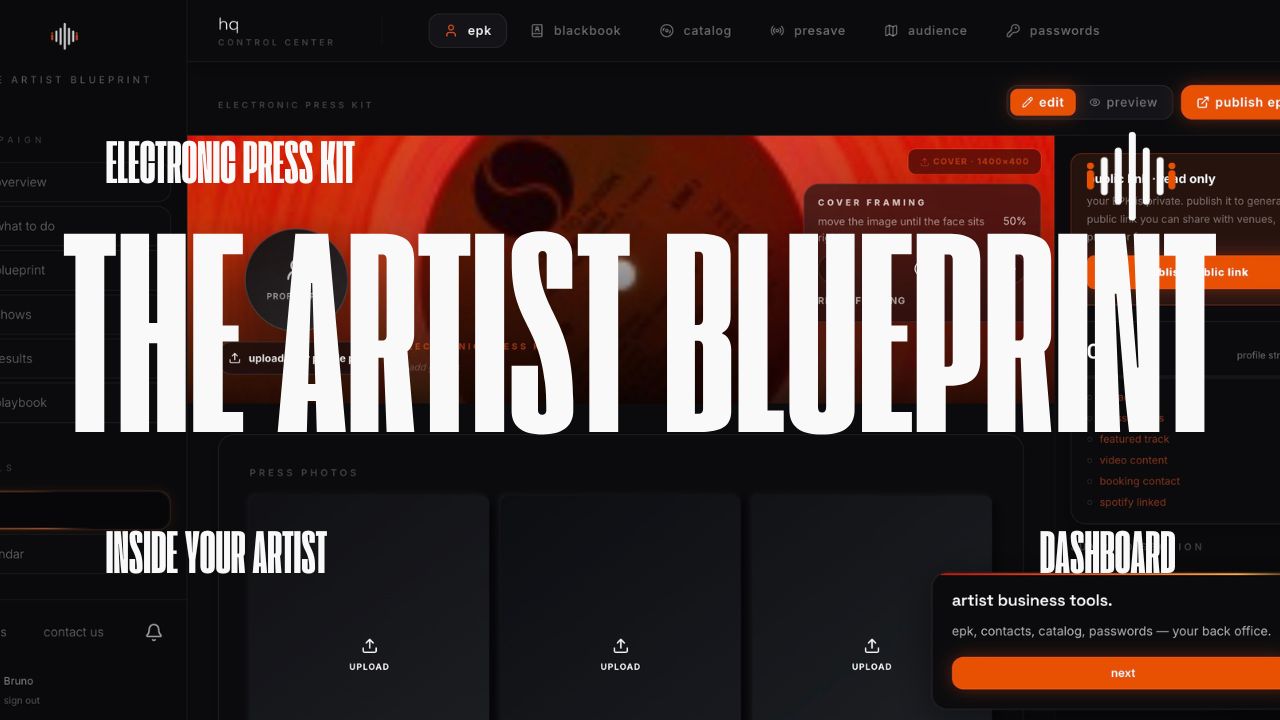
That gap is why The Artist Blueprint, BR's own platform, does not try to be Chartmetric. TAB's comparison page draws the line as analytics versus execution, and says plenty of teams use both. I would rather say that plainly than pretend one product replaces the other.
So, is Chartmetric worth it? A verdict for each reader
If you are a solo artist with one project: not yet. Learn to read the signals Spotify's algorithm responds to and your free dashboards first. If you want everything in one view, Soundcharts' single-artist plan is the cheapest way to try it.
If you are an artist with a team and real money going into campaigns: maybe, for a few months around a release, to benchmark against artists at your level. Take the trial with one question you want answered, and cancel if the answer does not change a decision.
If you are a manager with a small roster: probably yes, at the ten-artist tier of either tool, because comparing your artists with their peers is part of the job. The organizing half of that job is its own problem, and the roster piece in this issue takes it on.
If you are a label or an A&R team scouting talent: yes. This is who these platforms are built for, and the discovery tiers are the reason they exist.
Data is worth paying for when it changes what you do next week. If you cannot name the decision a dashboard would change, the free ones are enough for now.
Read next: How to Manage Multiple Artists Without Dropping One →
Got a record the numbers should notice? Submit your music →
Working on something bigger than one release?
We build and run campaigns for artists and brands — testing a single, rolling out an album, taking a tour global. Same team from brief to launch.
Comments