Giving your manager access to your accounts does not mean sending passwords. Spotify for Artists, YouTube and Instagram all offer proper team access, and some accounts should never leave your name.
can you send me the spotify login real quick
It arrives at 11 p.m. from someone you trust, about something that really does need doing. The easy answer, pasting a password into a chat, is the one that causes the most trouble later.
This is a short guide to giving your manager access to your accounts the right way: which ones to share, how to share them without handing over a password, and what should stay in your name no matter who is on your team.
Why not just send the password?
Because a password gives everything to everyone who ever holds it, for as long as it stays unchanged, with no record of who did what. When the relationship is good, that feels fine. When it ends, you are changing passwords across a dozen services, hoping you found them all. Proper access can be limited to the job, and you can take it back in a minute.
Which accounts can I share without a password?
More than most artists realize. Spotify for Artists lets you invite team members at three access levels: Admin, Editor and Reader. According to Spotify's help page, Admins and Editors can pitch upcoming releases and create campaigns, Readers can only see stats and profiles, and a separate Team Admin level is the only one that can invite or remove people and see team activity.
YouTube Studio lets a channel owner add a Manager, who can manage permissions, an Editor, who cannot, and a Viewer, plus limited versions of Editor and Viewer that hide revenue data, as Google documents.
Instagram offers shared access for exactly this situation, and its help center explains how it works.
Giving your manager access to your accounts at the right level
The level the job needs, and no higher. A manager who pitches releases and runs campaigns needs Editor access on Spotify for Artists, not Admin by default. The power to add and remove other people is a real decision rather than a setting to click through. Keep it yourself unless there is a clear reason to hand it over.
What should always stay in my name?
The accounts that hold ownership or money. Your distributor account, where your releases and payouts live. Your registrations with your performing rights organization and any publishing administrator. The bank details on every platform that pays you. And the email address that every other account resets to, which is the one people forget.
A manager can work inside all of these with delegated access, or with you in the room. None of them should be registered to anyone but you or your own company.
What if it's my label asking?
The same principle holds, with more at stake. Your contract may say something specific about who controls which accounts or data, so read it before anyone changes anything. If you are the one running the label, the back office side of that job is its own discipline.
What happens when we stop working together?
If access was given properly, you remove it and it is gone. On Spotify for Artists, a Team Admin removes the team member. On YouTube, the owner or a Manager removes the role. If passwords were ever shared, change every one of them, starting with that email account, and turn on two-factor authentication while you are there.
What about The Artist Blueprint?
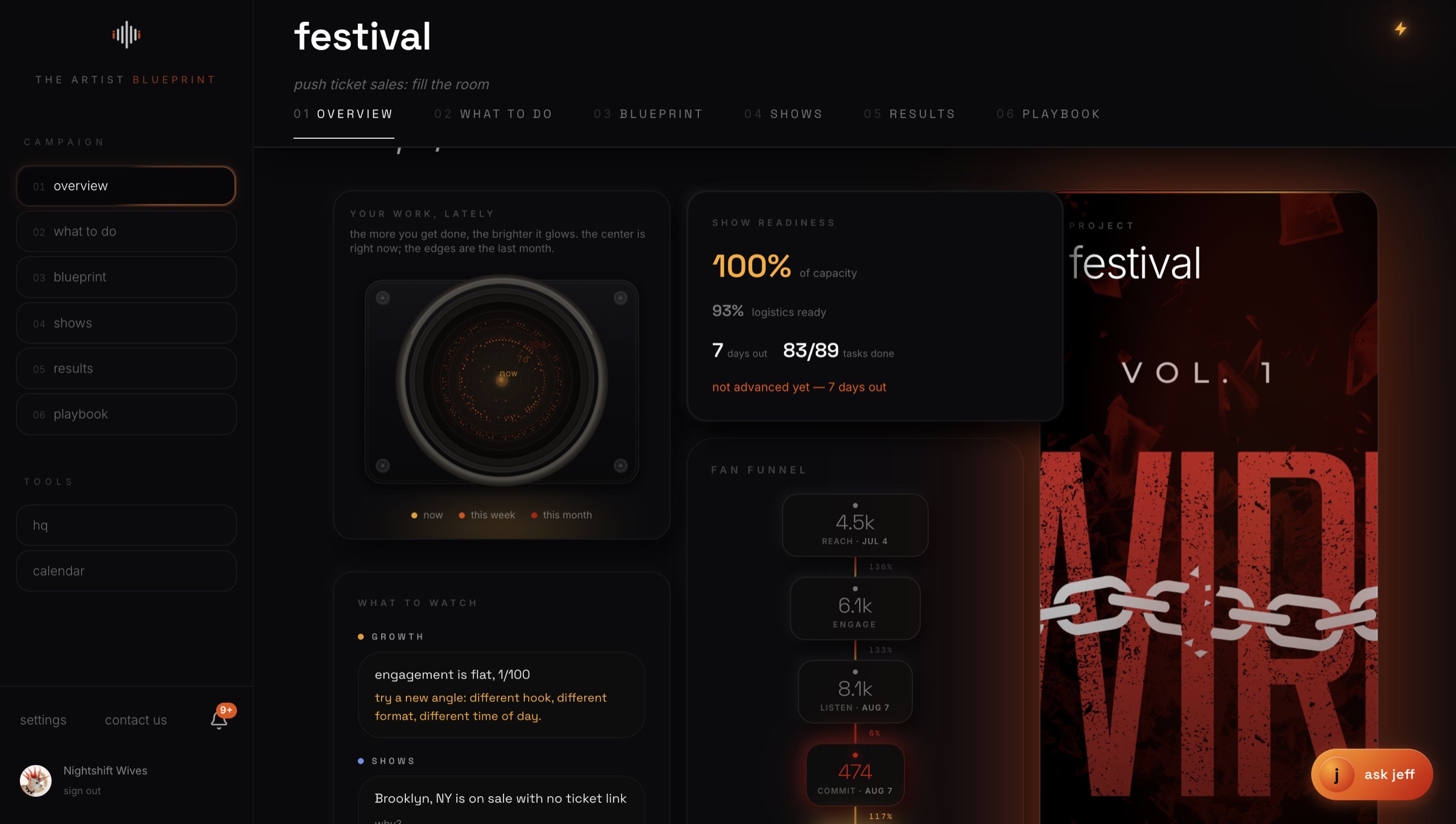
It works the way it should work everywhere else. The account belongs to the artist. Your campaigns are created and held in your own dashboards, and you invite your team in instead of handing anyone a login. How many people you can bring in depends on your plan, and the pricing page lays that out. If a manager moves on, the campaigns stay where they were: with you.
Managers reading this, the roster version of this advice starts from your side of the table.
Next time the late-night message asks for a login, send an invite instead. It takes two minutes, and it is the most professional thing either of you will do that week.
Read next: How to Manage Multiple Artists Without Dropping One →
Got a team and a record ready? Submit your music →
Working on something bigger than one release?
We build and run campaigns for artists and brands — testing a single, rolling out an album, taking a tour global. Same team from brief to launch.
Comments