How to make an EPK that gets you booked: the sections that matter, ranked by what talent buyers and press actually use, and how to build a shareable one in The Artist Blueprint.
Nobody reads your EPK from top to bottom.
A talent buyer opens it to answer three questions: can this act draw, what does it sound like, and who do I email. They close it the moment those are answered, or the moment they are not. That changes how to make an EPK. An electronic press kit, meaning the page or file that introduces you to bookers, press and curators, works when it gets someone to a yes quickly. Built like a scrapbook of everything you have ever done, it buries the three answers.
What goes in an EPK, ranked by what actually gets used
This list is judged, not alphabetical. The first three decide whether you get booked. The rest help or clutter, depending on how strong they are.
1. The music, playable in one click
Your two or three strongest songs, at the top, playable without a download or a login. Not the whole catalog. The song you would play for someone in an elevator goes first.
2. Proof that people show up
For press, streaming numbers and a few notable placements carry weight. For a booker, the proof that matters most is live: rooms you have played, how full they were, cities where you sell tickets, a tour that is on sale now. If you are on the road, say so above everything else.
3. A contact that reaches a person
Booking, press and management, each with an address someone actually answers. A kit with a contact form and no names loses dates to one with an email.
4. Photos people can print
High resolution, a landscape and a portrait, with the photographer credited so outlets can caption it correctly.
5. A bio in two lengths
A short one to paste and a long one to research from. Writing the short one well is harder than it looks, and it is the version most people will use.
6. Press quotes, if they are real
One line from an outlet people recognize beats ten from friends. No quotes yet? Leave the section out rather than padding it.
7. Everything else
Video, stats, achievements, a rider. Keep what is strong and cut what is not. Your visual identity should hold the whole thing together, though the font matters far less than the first song.
How to make an EPK in The Artist Blueprint
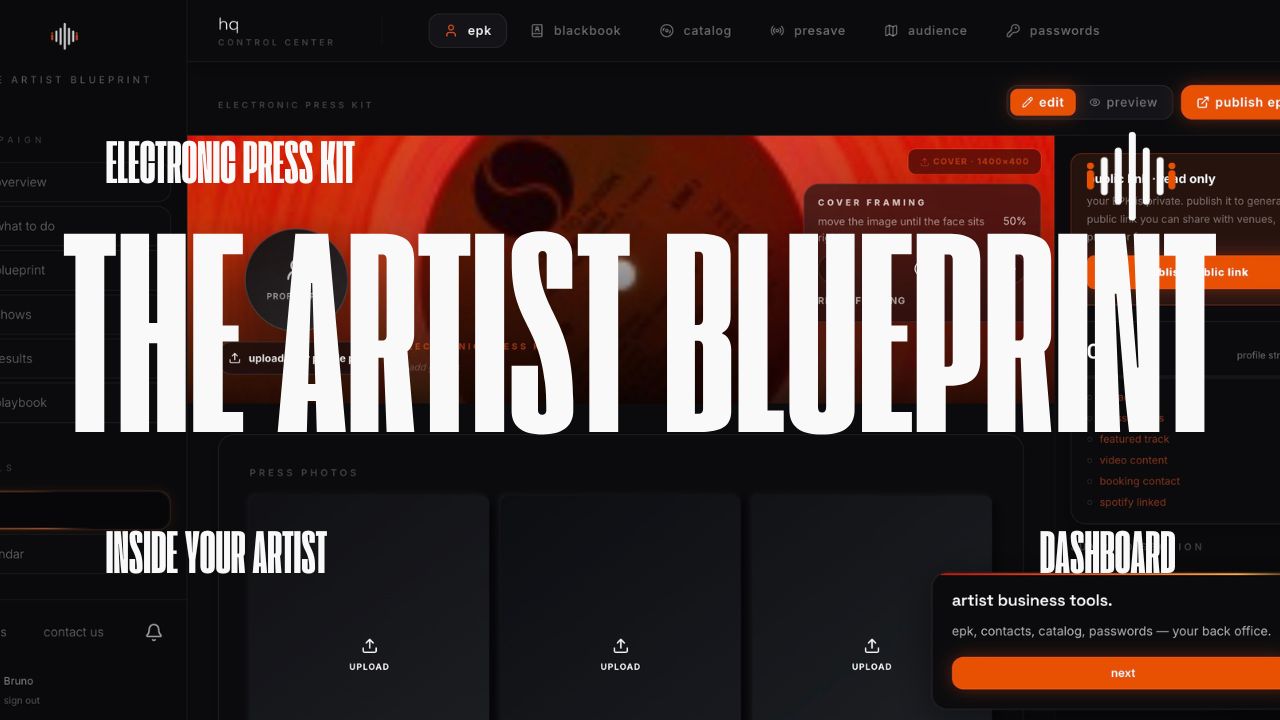
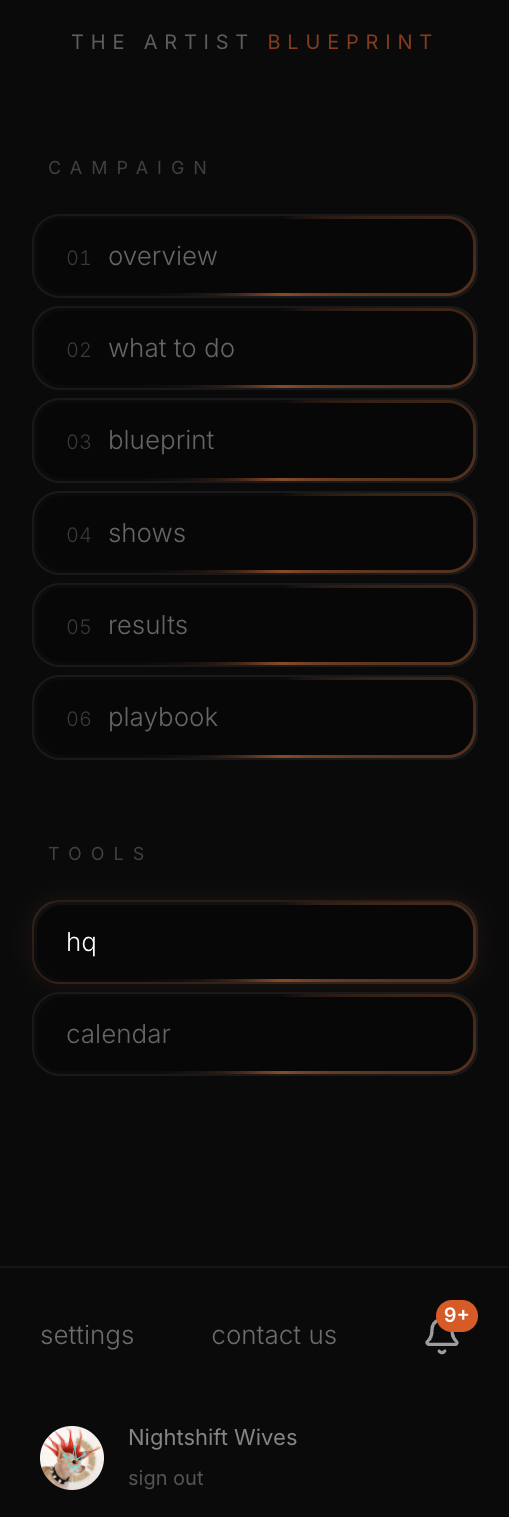
The EPK builder lives in HQ, the back office, and it is built around the same priorities. A Branding campaign is where the EPK meets the rest of your image: visual identity, creative direction and press. These screenshots come from the demo band's kit, and you can see that demo EPK live.
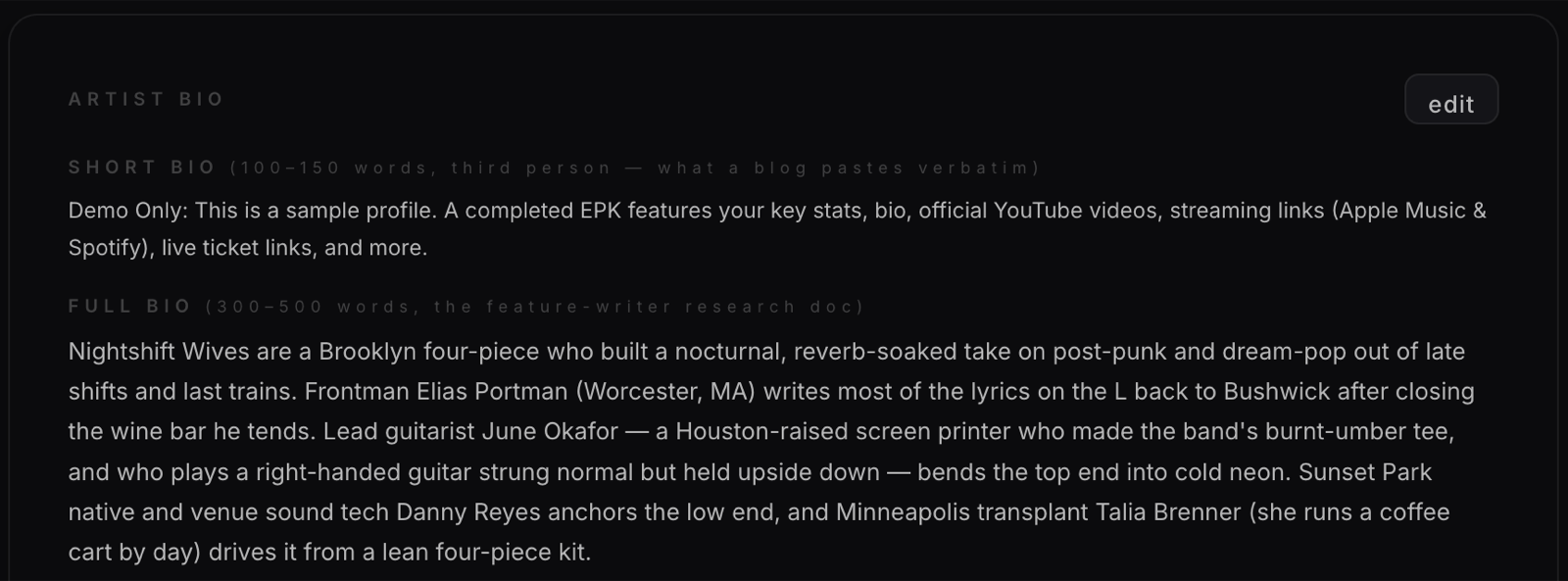
The bio section asks for two versions. The short bio is 100 to 150 words in the third person, described in the editor as "what a blog pastes verbatim". The full bio runs 300 to 500 words, "the feature-writer research doc". Press photos sit above it, each with an optional photo credit.
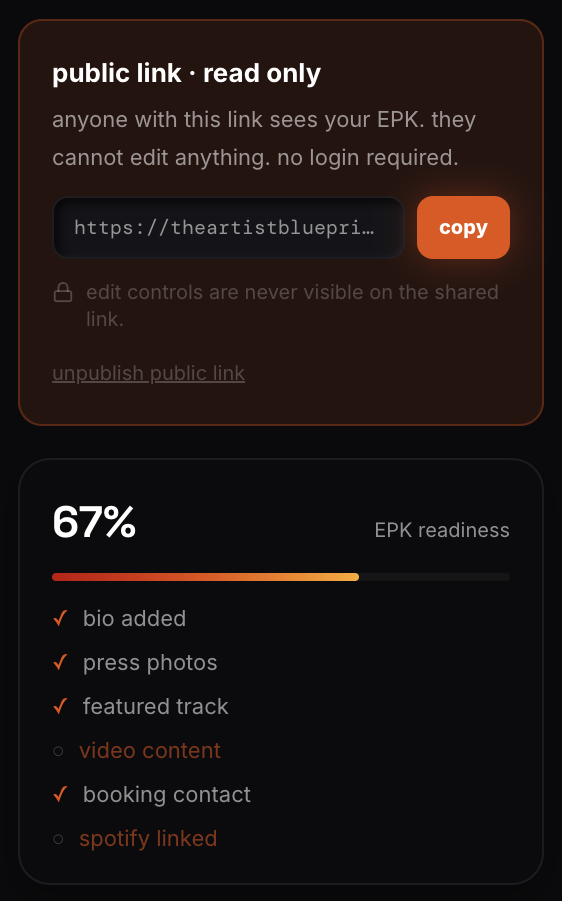
A readiness checklist tracks what the kit is missing: a bio, press photos, a featured track, video, a booking contact and a linked Spotify. When it is ready, the public link is read only. Anyone with the link can see the EPK without logging in, nobody can edit it, and you can unpublish the link whenever you want.
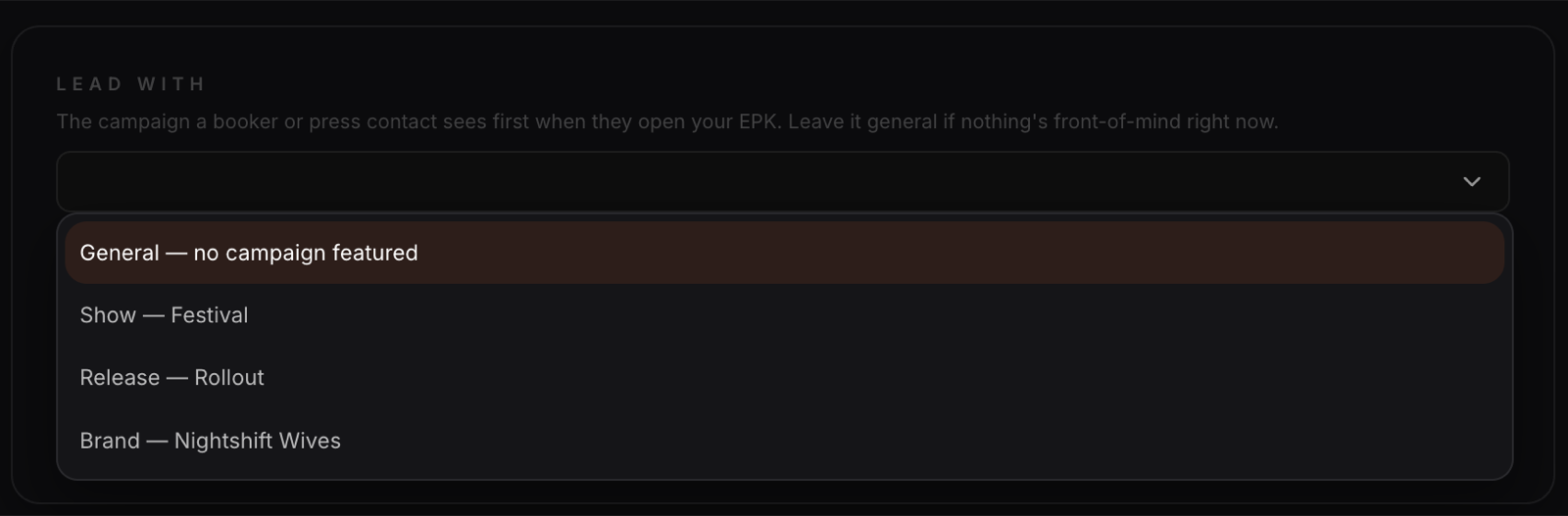
The part I like most is Lead with. You choose what a booker or press contact sees first when they open the kit, either nothing in particular or one of your campaigns, whether that is a show, a release or a brand campaign. The same EPK can lead with the tour this month and the single next month.
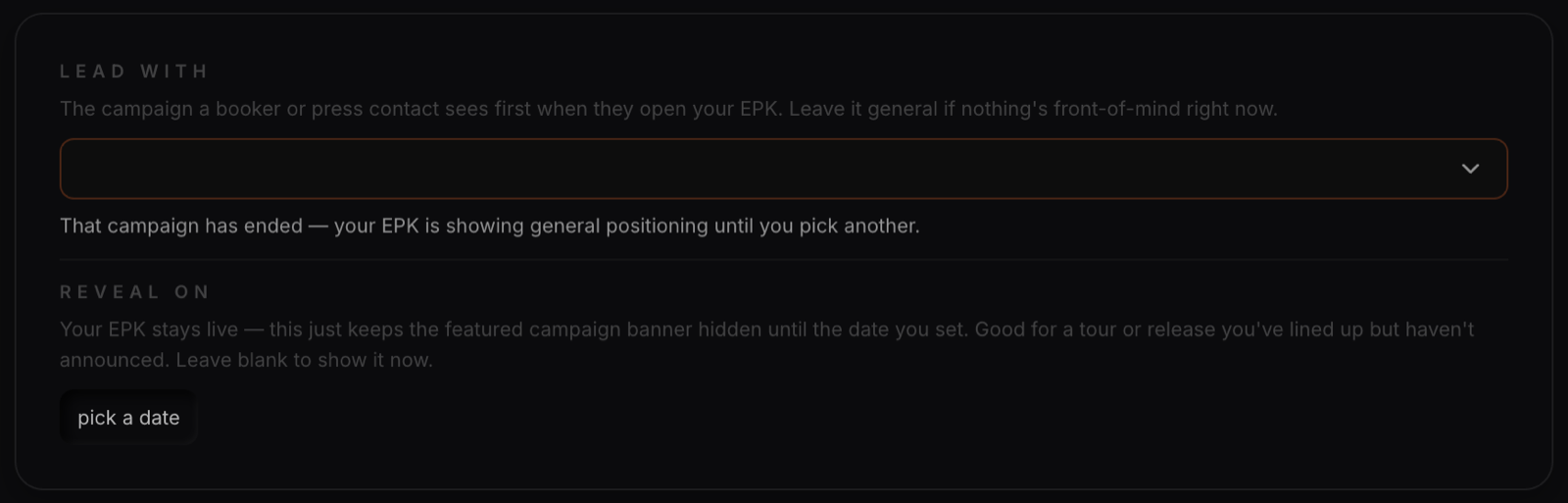
Reveal on handles the awkward in-between. Pick a date and the featured campaign banner stays hidden until then while the rest of the EPK stays live, which is exactly what you want for a tour or release that is booked but not announced.
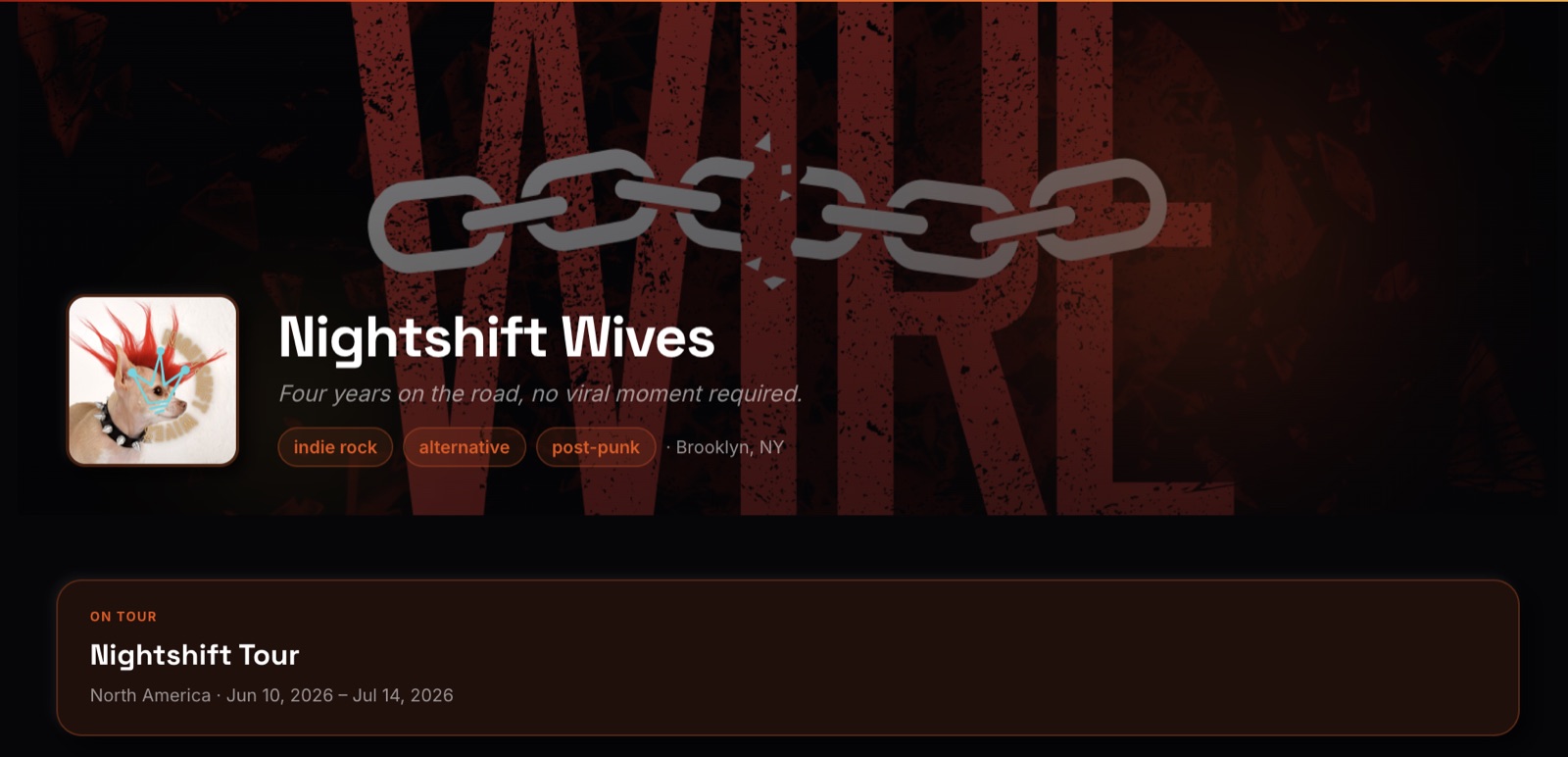
On the public page, the featured campaign sits up front. For the demo band it is an On tour banner with the dates, right under the name, which answers the first question before anyone scrolls.
Once someone books you off it, the work moves to advancing the show.
Build it to answer three questions, then send it. The EPK nobody receives is the only one guaranteed not to work.
Read next: How to Advance a Show: The Checklist Before Load-In →
EPK ready and music to share? Submit your music →
Working on something bigger than one release?
We build and run campaigns for artists and brands — testing a single, rolling out an album, taking a tour global. Same team from brief to launch.
Comments