How to plan a music release by working backward from release day, with every deadline in the order it closes, from the Spotify pitch to the press push.
If your single comes out six weeks from Saturday, which of its deadlines have already passed?
Most artists can name one date, the release date, and that is the trouble. A release is a stack of deadlines, and the ones that decide how far a song travels close weeks before it comes out. Knowing how to plan a music release mostly comes down to knowing which door shuts first.
So this plan runs backward. It starts on release day and counts back to the morning you pick the date, using a real plan from the demo account in The Artist Blueprint: a single set for September 19, with every step dated. The screenshots come from that demo, so the names and numbers on them are sample data.
Release day, September 19
By the time the song is out, there is almost nothing left to decide. The demo plan has one job on the day: push the press. Whatever premiered, whatever got written, goes out again with a link that now works.
That is the point of planning backward. Release day should feel like executing a list, not writing one.
Seven days out: the editorial cutoff
This is the hard floor. Spotify asks artists to deliver music at least seven days before release so its editors have time to listen, and a song pitched at least seven days ahead also lands in your followers' Release Radar playlists, per Spotify's own pitching guide. You can pitch only one song at a time.
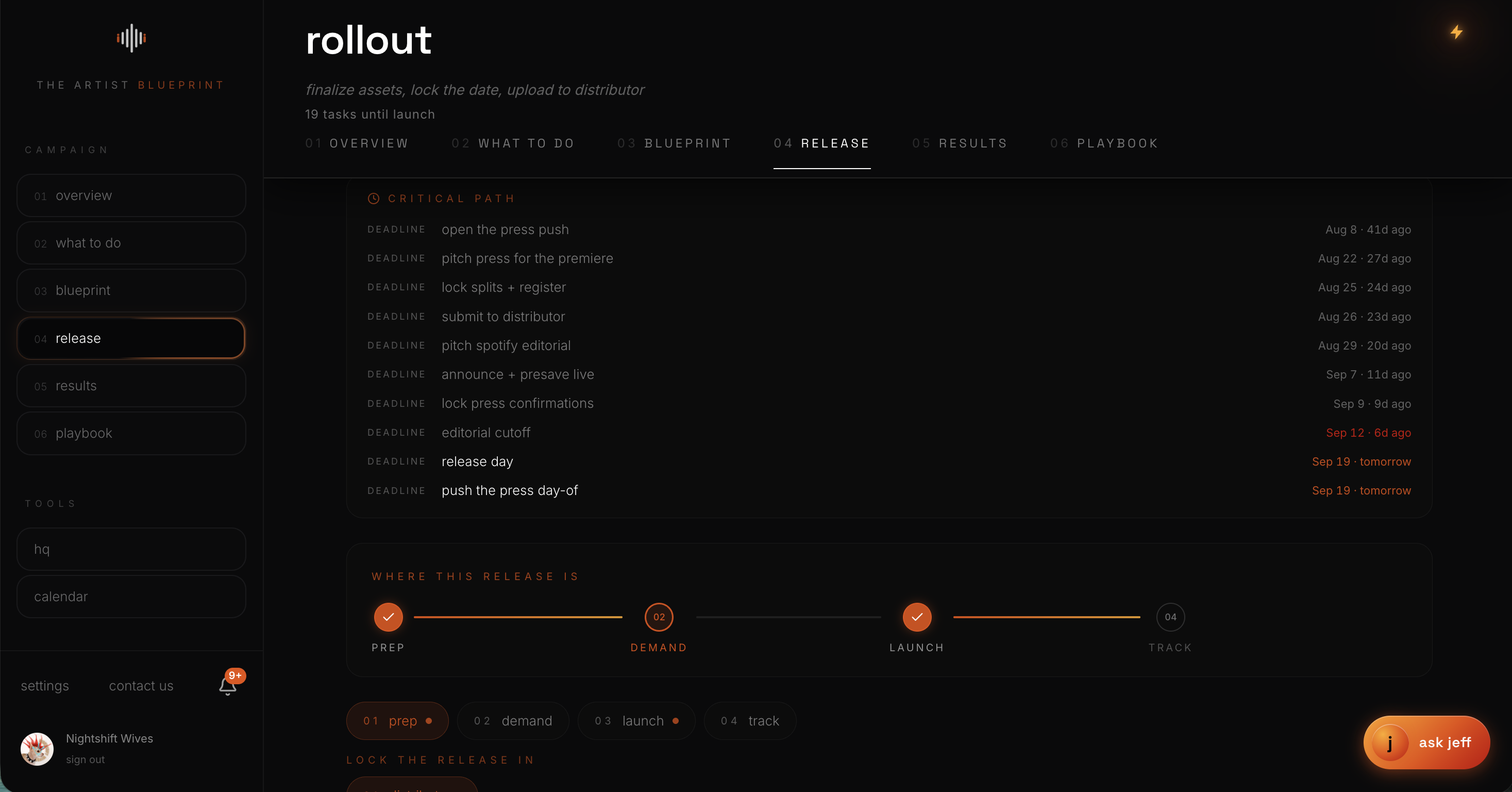
The demo plan puts its editorial cutoff on September 12, exactly seven days before release. Miss it and the song still comes out. It just comes out without a shot at an editorial playlist and without the Release Radar slot your followers would have seen. If you have never sent a pitch, our Spotify for Artists guide walks through the screen.
Twelve days out: announce it and open the presave
On September 7 the demo plan announces the single and turns the presave on. The announcement needs a cover, a date that will not move and a link that captures intent, which is what a presave is for: a fan saying yes before there is anything to play.
Twelve days is enough time for the announcement to travel and short enough that nobody forgets it before release day. More important than the exact number is that the date is locked before you say it out loud. Everything after this point is public.
Three weeks out: pitch Spotify editorial
Here the demo plan does something most artists skip. It pitches Spotify's editors on August 29, three weeks before release, instead of waiting for the seven day minimum.
The reason is mechanical. You can only pitch a song once it shows up as upcoming in Spotify for Artists, and it only shows up after your distributor delivers it. Pitching at three weeks leaves room for a delivery that runs late, a metadata fix or a cover that gets rejected. Pitching at seven days leaves room for nothing. How to write the pitch itself, and what editors do with it, is in our step by step guide to Spotify playlists.
Twenty-five days out: splits, registration and the distributor
This is the week the whole release depends on, and it is the least glamorous. On August 25 the demo plan locks splits and registers the song. On August 26 it submits to the distributor.
Locking splits means everyone who wrote or produced the song agrees, in writing, who owns what share before a cent comes in. Registering means getting the song into the systems that pay you: your performing rights organization for the songwriter's share, and the other collection points explained in our breakdown of masters, publishing and royalties. Done late, this is the step that sends money into limbo for months.
Submitting to the distributor needs the final audio, the cover art and the metadata: titles, credits, the release date, a UPC for the release and an ISRC for each track. Every distributor sets its own lead time. Check yours before you commit to a date, because it decides when Spotify can see the song at all.
Four to six weeks out: the press push
The demo plan opens its press push on August 8, six weeks before release, and pitches a premiere on August 22. Confirmations are locked on September 9.
A premiere has to be agreed before you announce, because the outlet wants to be first. Six weeks sounds early until you count the steps: find the writers, send the pitch, follow up once, send the private link, agree a date. If press is part of the plan, it is the first thing that starts and the last thing that confirms.
Before any of it: pick a date you can hit
Now read the list forward. The earliest step in the demo plan sits six weeks before release. That is the real answer to how far in advance to plan a release: at least as far back as your earliest step, plus a buffer for the thing that goes wrong.
If you are counting back from a date and the first step is already behind you, move the date. Do not squeeze the steps. A release date is a promise you make to yourself first, and the only one on this list you can change without anybody noticing.
How to plan a music release in The Artist Blueprint: the Rollout campaign
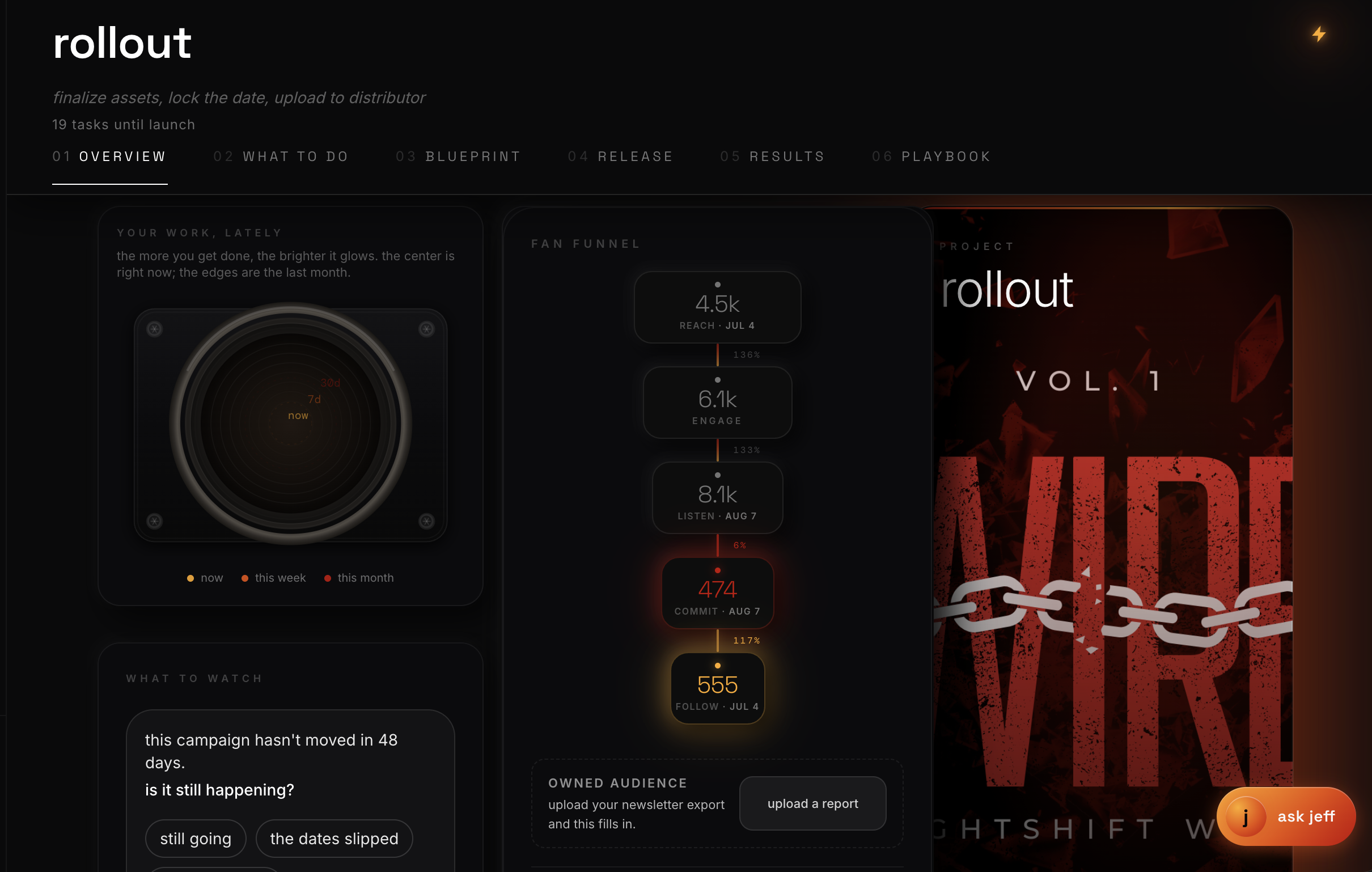
In The Artist Blueprint, this kind of plan lives in a Rollout, the campaign type for a single, an EP or an album. The campaign header counts the tasks left until launch. In the demo it reads 19.
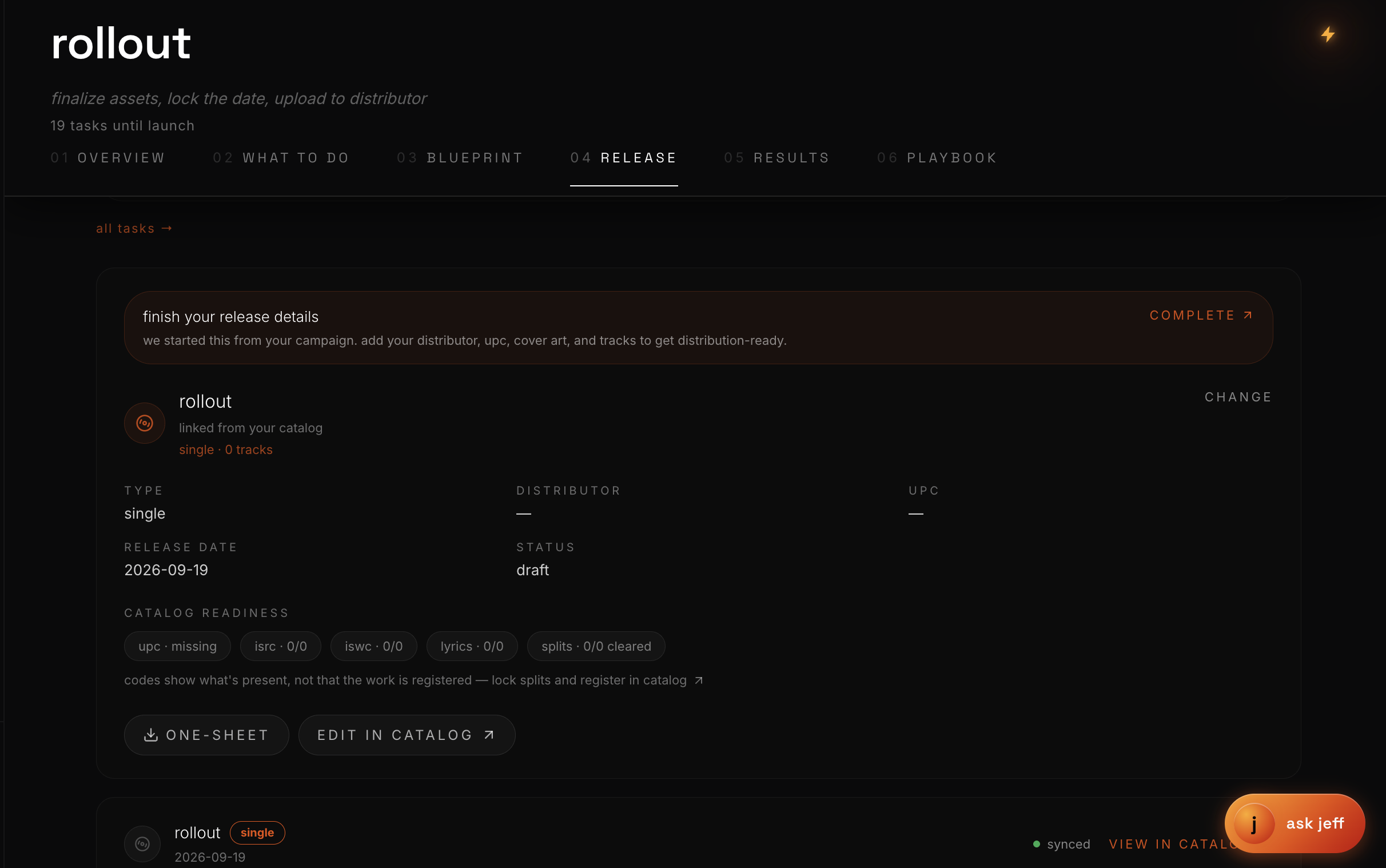
The fourth tab on a Rollout is Release. It starts the release record from the campaign and asks for what distribution needs: the distributor, the UPC, the cover art and the tracks. A catalog readiness row checks the UPC, ISRC, ISWC, lyrics and splits, so the unglamorous week above cannot quietly slip.
Further down the same tab, the critical path lists every step with its date, the same ten this article just walked backward, from opening the press push to release day. Above it, the release moves through four stages: prep, demand, launch and track.
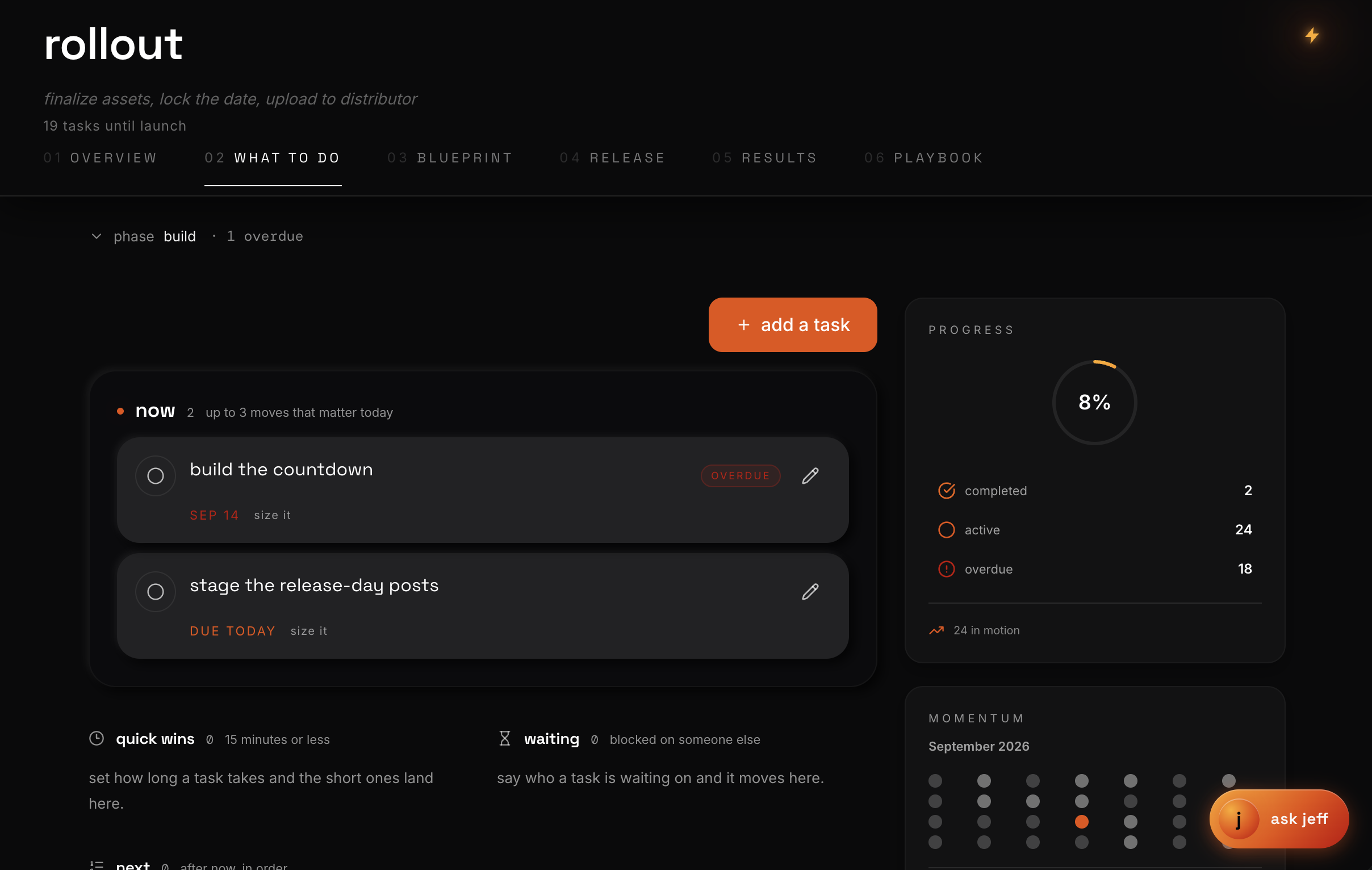
What to do turns the plan into today's work. In the demo, the campaign is in its build phase with one task overdue (build the countdown) and one due today (stage the release-day posts), and a progress card counts what is done, active and late.
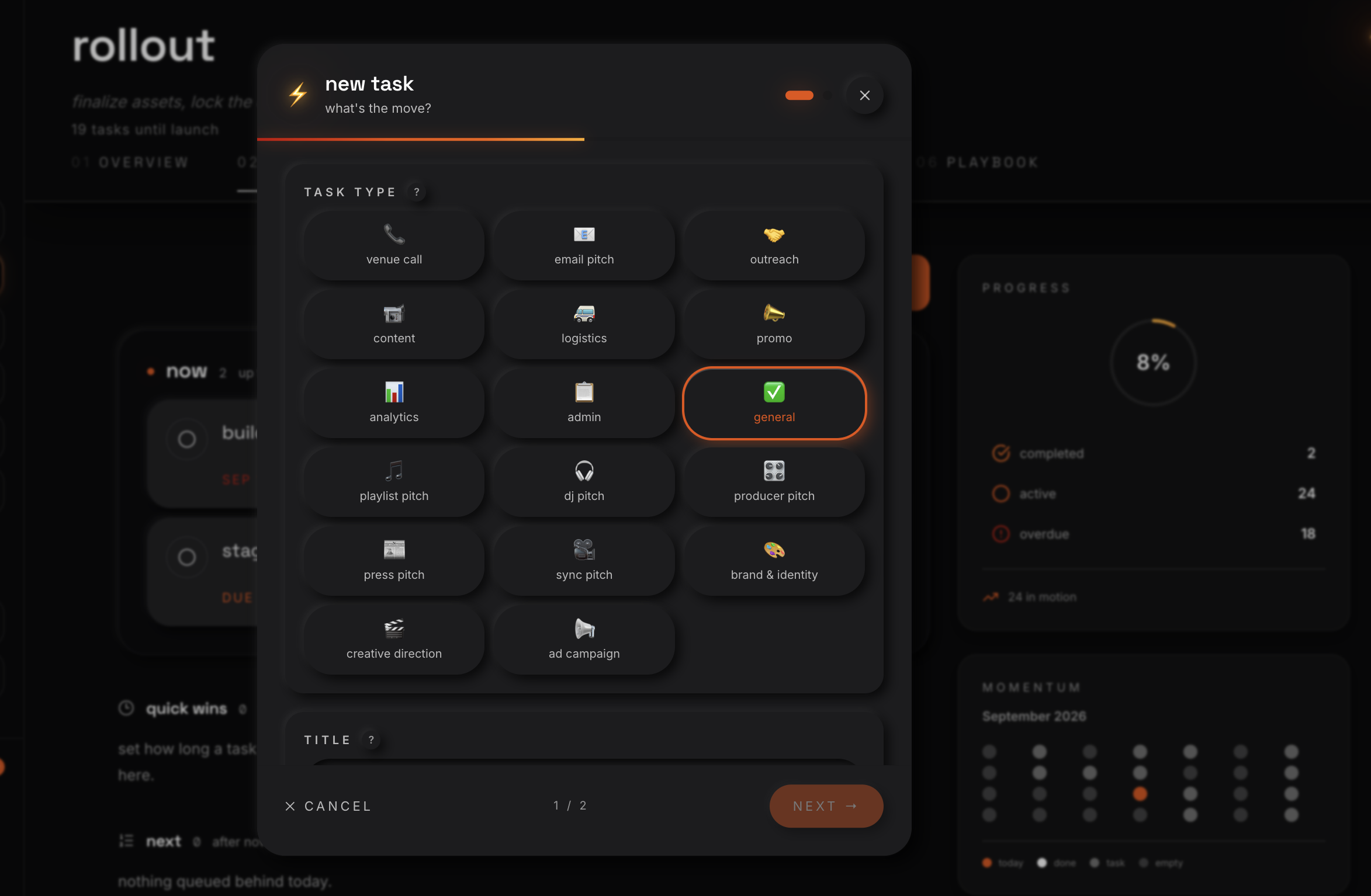
Adding a task starts with its type, and the list reads like a release team's job board: playlist pitch, press pitch, sync pitch, DJ pitch, content, promo, ad campaign, creative direction and more.
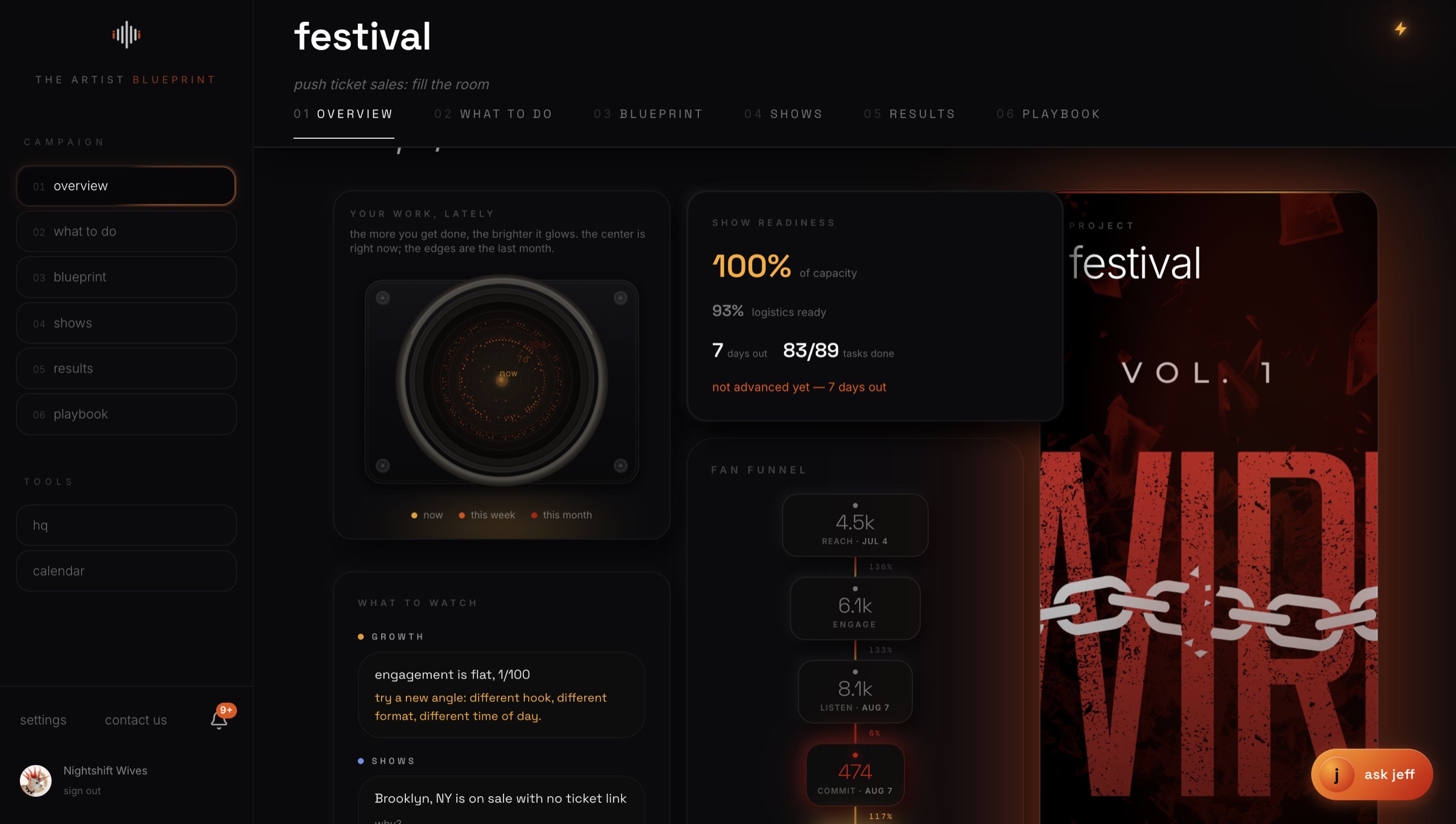
The card I like most is on Overview. Under What to watch, the demo campaign has not moved in 48 days, and the screen asks plainly whether it is still happening, with two answers: still going, or the dates slipped. Most release plans never ask that question. They just go stale.
A Rollout can be your first campaign, and the first campaign is free for every type except tours. What comes after depends on your plan, which the pricing page lays out.
Whether you plan in a spreadsheet or in a Rollout, running it yourself works when the deadlines are on paper before the date is. Count back first. Announce second.
Read next: DIY Music Marketing: When Running It Yourself Wins →
Release date on the calendar? Submit your music →
Working on something bigger than one release?
We build and run campaigns for artists and brands — testing a single, rolling out an album, taking a tour global. Same team from brief to launch.
Comments